
To the 155th anniversary of the birth of Evgeny Paton
 Evgeny Paton was born on March 4, 1870, into the family of a Russian Empire consul in Nice, France. He received his higher education in 1894 at the Royal Saxon Technical University in Dresden, Germany. He was offered a teaching position at the Department of Structural and Bridge Statics, and he had already begun working at the design office for the construction of the new Dresden railway station, but he declined the offer.
After graduating in 1896 from the St.-Petersburg Institute of Railway Engineers, Paton began teaching at the Institute while simultaneously working in the technical department of the state railways, where the designed bridges and floors. Since the spring of 1889, he worked at the Moscow Engineering School of Railway Communications, and in 1901 he defended his dissertation and was appointed professor of the Department of Bridges.
In 1905, Paton began working at the Kyiv Polytechnic Institute, where he headed the Department of Bridges and was elected dean of the Civil Engineering Faculty. He improved educational programs, established laboratories, created an engineering museum, continued scientific work, and published manuals and textbooks. In 1914, Paton organized the Bridge Section of the Military-Industrial Committee of the Southwestern. Front, where he designed and supervised the production of bridges, pivot-lift trestles, icebreakers, and other structures. 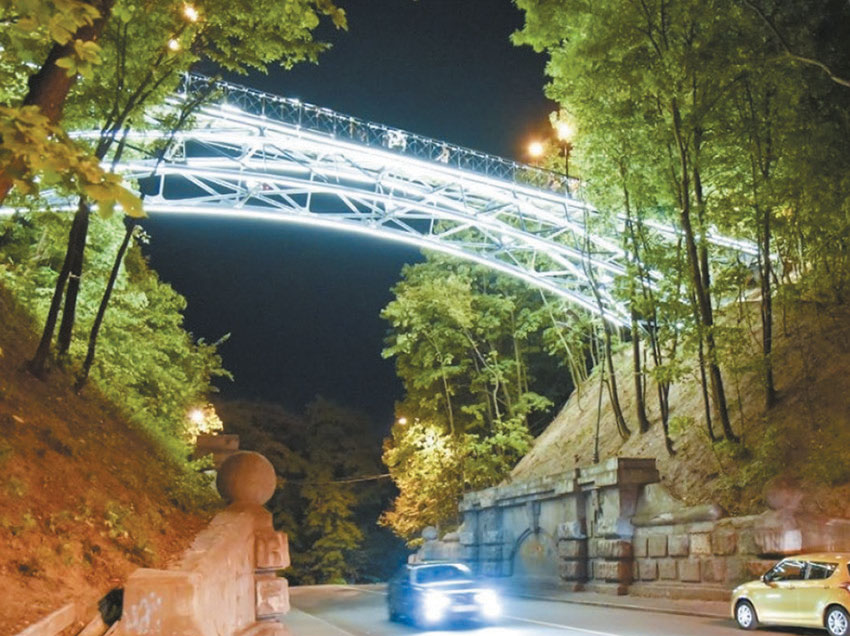
For crossings over the Dnipro River, he developed the designs for seven large strategic demountable bridges.
For about 35 years of scientific, engineering, and teaching activity, Paton dedicated himself to bridge construction. He published over 160 scientific papers and created designs for 35 bridges, floors, and crossings. From 1920 onward, Paton, together with his students, actively participated in the restoration of destroyed bridges. Simultaneously, from 1921 to 1931, he served as head of the Kyiv Bridge Testing Station.
In 1929, Paton was elected an academician of the All-Ukrainian Academy of Sciences (now the National Academy of Sciences of Ukraine). Within the Academy, he organized the Electric Welding Laboratory and the Electric Welding Committee — public organizations that facilitated cooperation between scientists and engineering-technical workers interested in the development of welding production. Paton was elected chair of the Committee. 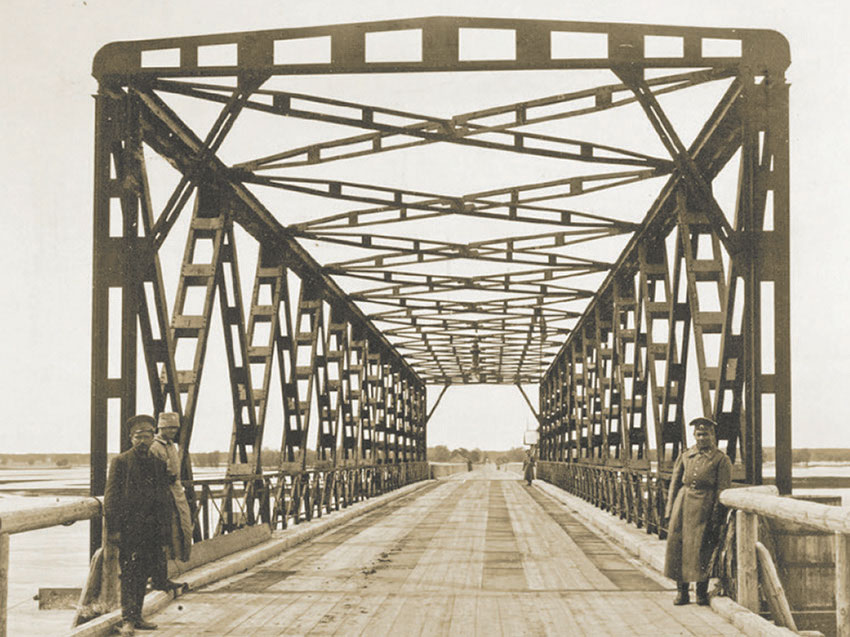
From 1929 to 1933, Paton and a small team conducted studies of the performance characteristics of welded structures and carried out comparative testing of a series of full-scale riveted and welded products. The results were presented in 1933 in the first domestic manual on the design of welded structures, which was later reprinted in foreign editions.
In 1932, Paton was the first in the world to develop and propose a comprehensive program for the development of welding, which was supported by the government. In 1934, the government of the Ukrainian SSR issued a decree on the establishment of the Electric Welding Institute (EWI). Evgeny Paton was appointed director. In line with the Institute’s main areas and the comprehensive nature of its work, he organized several departments: scientific-research, design, welding equipment, welded structures, and an experimental-production base (workshops for manufacturing instruments and devices). EWI became a model scientific institution capable of creating innovative technologies — from conceptual and fundamental research to wide-scale industrial implementation.
At Paton’s initiative, who paid great attention to personnel training, a department for training welding engineers was established in 1935 at the Kyiv Industrial Institute (National Technical University of Ukraine “Igor Sikorsky Kyiv Polytechnic Institute”), which later became the Welding Faculty and Department. He headed them until 1939.
The results of research on processes in the welding pool and other works laid the foundation for a new scientific direction — the metallurgy of welding processes. A remarkable achievement was the development of automatic submerged arc welding. By early 1939, under Paton’s leadership, equipment, materials, and technology for high-speed automatic welding had been developed, which ensured high-quality welds when working with structural steels.
On December 20, 1940, the USSR leadership adopted a decree on the implementation of high-speed automatic submerged arc welding in industry. Paton was appointed a member of the Council on Mechanical Engineering under the Council of People’s Commissars of the USSR and was entrusted with supervision over the implementation of this decree. Simultaneously, he was assigned to head the Welding Department at the Central Scientific Research Institute of Machine Building Technology (Moscow) while maintaining his position as director of EWI. Within six months, EWI staff managed to implement the innovative technology at 20 large enterprises, significantly increasing production efficiency. In 1940, Paton authored the monograph “High-Speed Automatic Submerged Arc Welding”.
In August 1941, EWI was evacuated to Nizhny Tagil. In 1942, under Paton’s leadership, automatic welding of complex-alloyed armor steels was developed for the first time in the world. This accelerated the production of tank hulls tenfold. In the shortest possible period, under his direction, mass production of all types of tanks, aerial bombs, rocket shells, and many other types of weapons and ammunition was organized.
In 1943, Evgeny Paton became the first Ukrainian scientist to be awarded the title Hero of Socialist Labor.
In 1944, the EWI returned to Kyiv, and Evgeny Paton became involved in addressing the issues of restoring and developing the national economy. The conversion of the highly efficient “military” technology — automatic submerged arc welding — for civilian use became the institute’s primary task. By the end of 1944, automatic submerged arc welding had been implemented at 12 major enterprises in Ukraine. In 1947, Evgeny Paton was entrusted with the scientific and organizational support of all welding operations in the USSR. During 1947–1948, 670 welding automatic machines were introduced at 111 plants across the country; EWI organized worker training, developed manuals, and created a special railcar equipped with training and demonstration equipment.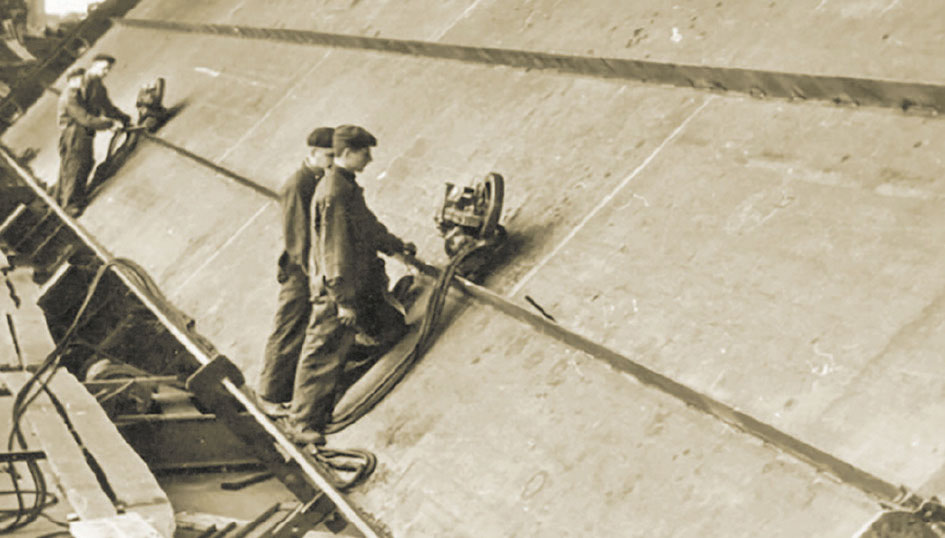
Evgeny Paton initiated fundamental research that became the theoretical foundation of the science of welding, improved the principles of designing new welding equipment, welding process control systems, and equipment for manufacturing metal structures, as well as addressing other engineering challenges.
One of Paton’s ideas was to divide structures into units and weld them using specialized machines at separate positions along conveyor lines, which was a fundamentally new approach to the design and production of machines, tanks, pipe, and industrial structures. The Institute addressed tasks related to improving the manufacturability of welded products, reducing their weight, and decreasing the number of connecting parts.
Under his leadership, innovative industrial methods were developed for the production of pipes, welding of main pipelines, oversized tanks, blast furnace complexes, wagons, ships, atc. — primarily at the plants of the Dnipro and Donbas regions. From 1946 to 1948, a railway tank production line was launched at the Illich Iron and Steel Works in Mariupol.
With Evgeny Paton’s active involvement, the following were developed for the first time in the world: a method of semi-automatic submerged arc welding with mechanized feeding of the electrode wire through a flexible hose to a manually operated holder with a nozzle and a flux hopper; a welding gun for ceiling structures; specialized installations for welding boiler equipment and industrial building steel structures.
For the first time in the world, it was proven that the shape of welded structures could be changed, and a fundamentally new method of constructing large sheet structures was developed — by rolling up fully welded sheets. Since 1948, this method has been used for building tanks. Also for the first time in the world, EWI developed technologies for combined assembly and welding, relevant machine tools and conveyor lines, and rational welded designs of mining, power, and metallurgical equipment, as well as furnaces and bridges. Several welding machines, mechanisms, and devices — such as the roll-welding machine for mining carts, electroslag welding equipment, and a continuous system for automatic welding of large-diameter pipes — had no foreign equivalents.
For construction and installation works, technologies and equipment for automatic welding of vertical and overhead seams under flux were developed for the first time. The first all-welded blast furnace in Europe, with a volume of 1033 m³, was erected in 1948 in Zaporizhzhia using this technology.
To increase welding speed, new technologies were developed for automatic submerged arc welding with an electrode tilted “forward along the weld axis”, split electrodes, atc. In 1946–1947, EWI created a welding technology with a speed of 160–200 m/h using two separately burning arcs, along with the necessary welding apparatus.
In 1949, the first domestic continuous pipe electric welding machine, welding equipment, and power sources were put into operation at the Khartsyzk Pipe Plant. For the first time, assembly and welding were performed in a single unit with a stationary welding head and a moving workpiece.
From 1949 to 1953, the processes and nature of current flow through the slag bath, electrode metal melting, and heat exchange between slag and the welded product were studied. The electroslag welding method, which allows single-pass welding of thick-walled metal structures, was invented for the first time in the world.
In 1949–1950, the regularities of electric and metallurgical processes during arc welding of steel in active gases were studied. It was established that the metal quality could be improved by introducing additional deoxidizers, and the technology of welding in carbon dioxide was created for the first time in the world. In 1952, studies were conducted on the interaction of chlorine and fluorine with components of the arc plasma and molten metal during welding of aluminum and its alloys. For the first time, chemical compositions of haloid fluxes and arc welding technology were developed.
By the mid-1950s, Ukraine had restored its mining-metallurgical and fuel-energy industries. A mechanized method for welding circumferential seams of main pipelines was developed and applied in constructing the Dashava–Kyiv–Bryansk–Moscow pipeline.
In 1952, research was conducted for the first time in the world, establishing the fundamental possibility of using welding heat sources to produce extra hight-purity metal in the electroslag process. The first electroslag remelted ingot was produced, and a special remelting unit was created. 
Under Evgeny Paton’s leadership, comprehensive publications on various aspects of welding science and technology were issued. In 1948, he founded and became the chief editor of the Automatic Welding Journal.
Fundamental research laid the groundwork for the development of new scientific fields and breakthrough innovative technologies in numerous industries. Electroslag welding was invented for the first time globally, establishing the basis for a new branch of special electrometallurgy of high-quality metals.
From 1947 to 1952, the principles of weld metal alloying via flux-cored wire were established. Compositions of wires were developed, and arc surfacing techniques for wear-resistant surfaces of components operating under high temperatures and impact loads were introduced.
Between 1946 and 1951, under Paton’s guidance, a special low-carbon steel grade MSt3 was created for welded bridges. It was less sensitive to the thermal deformation cycle of welding. A new bridge design was developed, welding equipment was improved for both automatic and mechanized welding of structures, and technologies for plant-based and on-site welding were devised. 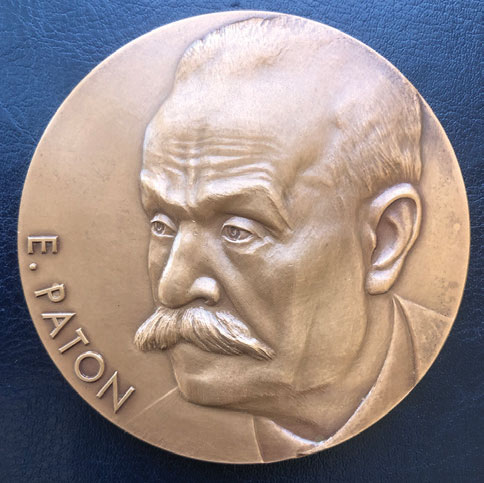
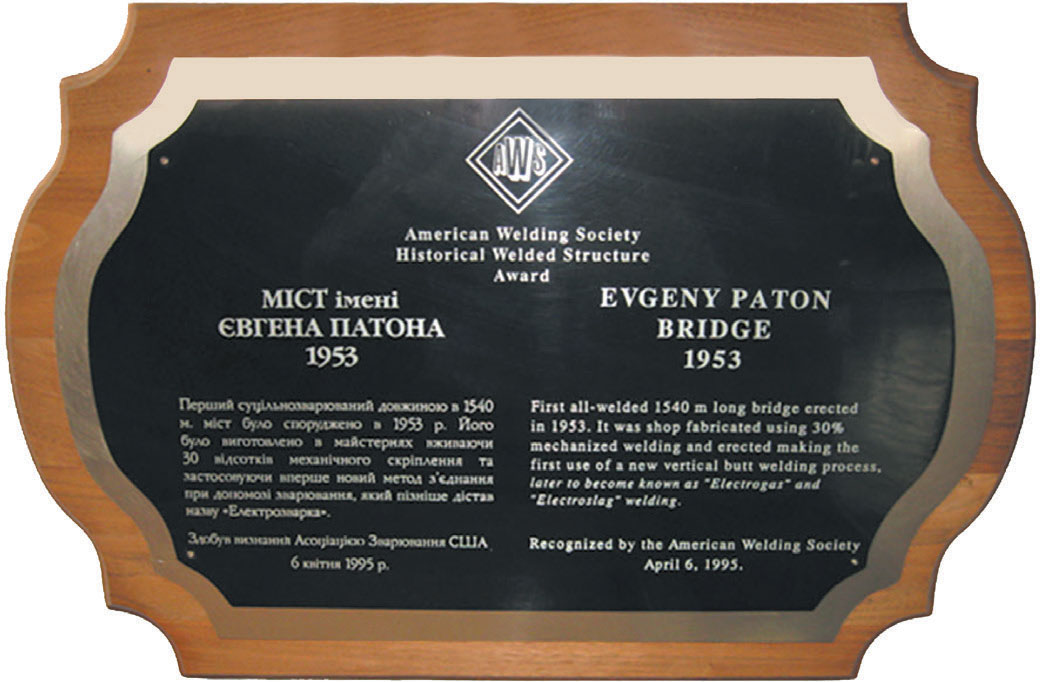
An outstanding example of the universal application of automatic submerged arc welding is the construction of the all-welded highway bridge across the Dnipro River in Kyiv, with a total length of over 1.5 kilometers. The bridge was completed in 1953 and recognized by the American Welding Society as an exceptional welded structure. The largest all-welded highway bridge in Europe was opened in Kyiv in November 1953. Evgeny Paton did not live to see its inauguration — he passed away on August 12, 1953, less than three months before the opening.
The American Welding Society in 1995 awarded the Evgeny Paton Bridge as a significant welded structure of the twentieth century.
In 2000, the International Institute of Welding established the international Evgeny Paton prize for professionals, who has made a significant contribution to science and technology through his lifetime dedication to applied research and development in the field of advanced technologies, materials and equipment for welding and allied processes.
WINNERS OF EVGENY PATON PRIZE:
- 2000 Dr. Stephen Maddox (United Kingdom);
- 2002 Eur. Ing. Wayne Thomas (United Kingdom);
- 2003 Prof. William Lucas (United Kingdom);
- 2004 Dr. Nobutaka Yurioka (Japan);
- 2005 Prof. John Norrish (Australia);
- 2006 Dr. Alan Sanderson (United Kingdom);
- 2007 Dr. Pingsha Dong (USA);
- 2009 Prof. Shang Yang Lin (China);
- 2010 Dr. Carl D. Lundin (USA);
- 2011 Prof. Wolfgang Fricke (Germany);
- 2012 Dr. Michael Szczesny (USA);
- 2013 Dr. Adolf F. Hobbacher (Germany);
- 2017 Prof. Yoshinori Hirata (Japan);
- 2018 Univ.-Prof. Dr.-Ing. Uwe Reisgen (Germany);
- 2019 Prof. David Olson (USA);
- 2021 Prof. Michael Ghede (Germany);
- 2023 Dr. Murali Tumuluru (USA);
- 2024 Prof. Suck-Joo Na (Korea Repyblic).
Evgeny Paton established the globally renowned Paton scientific and engineering school, which became a symbol of the effective implementation of fundamental scientific developments and will continue to make significant contributions to the advancement of science and technology in Ukraine.